PSHE & RSE
Stay alert and hold firmly to all you believe. Be mighty and full of courage. Let love and kindness be the motivation behind all that you do.'
1 Corinthians 16:13-14
Curriculum
Our PSHE/RSE curriculum covers the full breadth of learning pupils need to stay healthy, safe and prepared for life. This includes:
- Personal
- Social
- Health
- Economic
- Relationships
- Citizenship
PSHE & RSE education helps pupils maintain their mental and physical health and understand the various factors that influence their wellbeing. They learn how to build strong and supportive relationships, how to keep themselves safe in various situations and how to make thoughtful decisions about money, health and the online world.
Pupils may receive mixed messages about these topics from friends, siblings, social media and the wider world. High-quality RSE & PSHE ensures every child receives clear, accurate and age-appropriate teaching so they can make safe and informed choices as they grow.
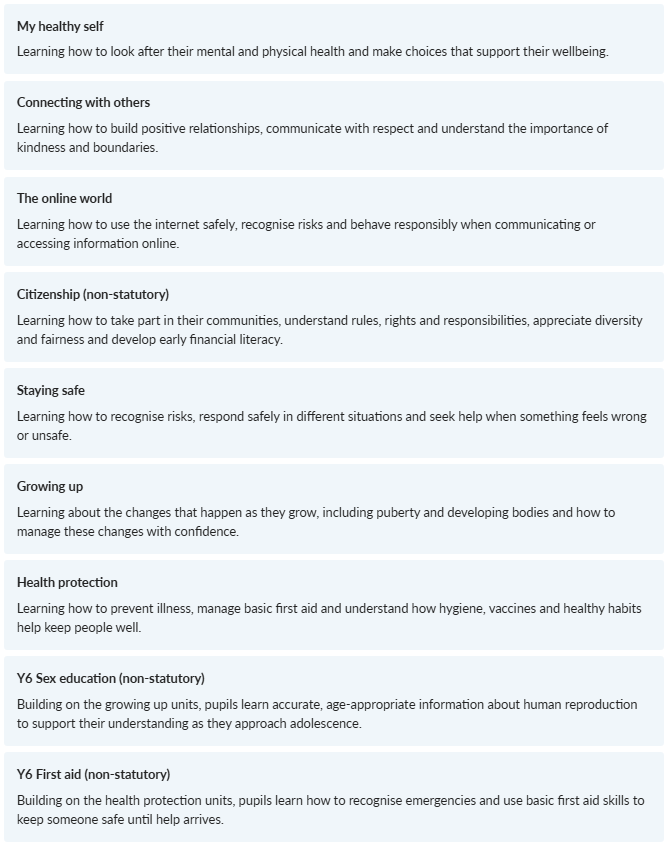
Our PSHE/RSE curriculum is organised into strands and key areas to ensure a broad and balanced curriculum.
Key areas group learning into meaningful themes and ensure that all statutory content is covered. The strands weave throughout all units, demonstrating how pupils develop lifelong skills in managing themselves, regulating their emotions, building positive relationships and thinking critically.
Together, the strands and key areas help pupils revisit important ideas over time, building their confidence and understanding in a structured way.
Some key areas are revisited each year, while others are revisited less frequently to reflect the volume of content in the statutory guidance and ensure learning is age-appropriate.
Teaching
PSHE/RSE is taught for 45 minutes per week. This allows sufficient time to meet the DfE’s Relationships Education, Relationships and Sex Education (RSE) and Health Education guidance. This recommendation is also informed by market research, which shows that many schools structure their RSE & PSHE provision in this way.
In addition to discrete lessons, PSHE & RSE learning is often reinforced through day-to-day school life. Teachers will naturally revisit and apply their learning in response to real-life situations that arise, such as issues on the playground, in the classroom or during discussions, helping pupils to make meaningful links between taught content and real experiences.
Consulting with parents
The RSHE statutory guidance requires schools to:
- Consult parents when developing and reviewing their RSE curriculum.
- Be open and transparent about what is taught, when it is taught and how it is taught.
- Clearly explain the distinction between relationships education and sex education.
- Inform parents of their right to request withdrawal from elements of sex education, where applicable.
- Make curriculum information and materials available to parents on request.
- Support clear communication that helps parents understand how RSE contributes to pupils’ wellbeing and safeguarding
Achievement
In PSHE & RSE, pupil outcomes go beyond pupils being able to recall key knowledge or demonstrate specific skills in the classroom. The curriculum is designed to support pupils’ confidence, wellbeing and the way they interact with others in everyday situations.
These aspects of learning develop gradually over time and can be harder to measure. When taught consistently as part of a well-sequenced curriculum, schools may notice changes in pupils’ attitudes, choices and behaviour across school life.
Over time, pupils may show increased confidence in expressing feelings, asking for help and making decisions. They begin to develop self-awareness and emotional literacy, which supports resilience when facing challenges or change.
Pupils may become better able to manage behaviour and responses, especially in challenging situations. They gain an understanding of why rules are vital for ensuring their own safety and that of others, and learn how to follow them.
Over time, pupils can develop resilience by learning to cope with setbacks, manage their emotions, make amends and move forward positively, thereby supporting a calm and safe school environment.